Friday, February 15, 2008

In memoriam: Snowball, 1997(?) - 2008

There were no visible symptoms until it was too late.

Snowball seemed a bit "off"; she was not as active as usual, and she'd lost some weight. It seemed like more than just the stress of a new puppy. I thought it was a mild fever, or a tooth gone bad. I never suspected a massive, inoperable tumor. She was suffering, and failing fast. We spent last weekend keeping her comfortable and saying our good-byes. It was all so sudden, and so gut-wrenchingly sad.

We adopted Snowball from the SPCA as a young cat, along with a kitten we named Muffin. The kids were also quite young at the time (3 and 6), so the kids and cats have grown up together. The cats moved across the ocean and back, endured quarantine, and weathered the arrival of more family pets. Snowball stood out from all of our pets for many, many reasons:
  • Snowball was sociable. Snowball was a great communicator, both verbally and with her tail. She could say "hello" by holding her tail just so. She liked spending time with the family. One summer we often played baseball in the front yard; she would always join us and be right in the middle of the action.
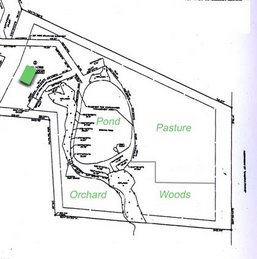
  • She loved the outdoors. At first we kept her inside, fearing neighborhood traffic. But our house in England had a walled garden, and she enjoyed exploring every inch of it. Our current property was even better. She often took walks with us, exploring the orchard and the pasture. I'm convinced the past four years were her happiest.
  • She was adventuresome. Where most cats will hide or withdraw from new experiences, Snowball seemed to thrive. Her feline curiosity, combined with incredible agility, took her to places most cats only dream of. She could fit into any box, no matter how small. In England, she managed to climb from the garden wall up onto the roof. She also liked to jump from the kitchen counter to the top of the cabinets. From that little space between cabinet and ceiling, she would hold dominion over all.
  • She was an excellent hunter, presenting her prey as a gift to her people. I wasn't so fond of this, but cats will be cats. And she was highly skilled. During her first year with us, when she wasn't allowed outside, she honed her craft on Beanie Babies. Returning from a week's vacation, we found the front hallway strewn with over 30 Beanie Babies and other plush toys from the kids' rooms! I can only imagine what the petsitter thought ...
  • Snowball had exceptional emotional intelligence. When we adopted her, the tag on her SPCA cage read, "loves people and likes to give kisses." And she did; she was affectionate with us from the moment she entered our home. She was also incredibly sensitive to human emotions. If one of the kids was sad, Snowball would pick up on their mood and immediately be at their side, providing comfort. I have never seen anything like it.
Snowball's passing was a devastating blow, partly because of all her redeeming qualities, but also because she had been an integral part of our family as the children moved from toddlers to teenagers. Snowball often appears in the "mental movie" of past events. We didn't know she was ill, but in retrospect there were signs. She seemed to be slowing down a bit. She hadn't jumped on the kitchen counters in quite some time. When the weather was unseasonably warm a few weeks ago, she didn't ask to go outside. I hope that wherever she is now, she is whole, and able to do all of her favorite things.


Wednesday, January 30, 2008

Welcome Woody!

Last week Chris went to his favorite hardwood store to buy wood for some bedside tables he's building. The hardwood store has two labs, who recently had a litter of pups. There was one adorable pup left, but someone had already put down a deposit on him. Chris spent a lot of time cuddling him anyway, and then left, thinking it was about time we thought about getting another dog. Today the hardwood place called; the other family had backed out. So he's ours! He's 9 weeks old and his name, of course, is Woody.


Sunday, January 27, 2008

News Flash! Heron snatches prey!

I just witnessed the most amazing thing, right from my kitchen window, and rushed to the computer to record the moment while the memory was still fresh.

This heron is a regular visitor to our pond. This morning he sat atop the duck house for hours, his feathers "fluffed up" to insulate him from the cold. Later this afternoon I looked outside and saw that he had waded some distance into the water. I'd never seen him do that before, so out came the binoculars for a closer look.

He was moving: inching along, slowly lifting one spindly leg, and then the next. Suddenly his head splashed into the water. He looked so ungainly, it could well have been an accident. Then I saw the shimmer. He had snagged a fish, and a big one, too!

Now I'm no expert at fish identification, especially when it's flapping about in a heron's beak, but this appeared to be a bluegill about 6" in diameter. It was ginormous. The heron waded over to the edge of the pond and set the fish down. He picked it up and dropped it a couple more times. The next time he picked it up, he waded back into the water. Surely he wasn't going to release it?!

The heron stood in the water for a few minutes, the fish's body glinting in the afternoon sun. Then the heron slowly extended his neck, pointing his beak high in the air. The fish disappeared, all in one piece. The heron remained in the water for a while but didn't catch anything else.

Wow!

Saturday, January 26, 2008

Mysterious Big Goose Party

No one knows who they were, or what they were doing...but their legacy remains...
"Stonehenge," from This is Spinal Tap.

I know many people consider Canada Geese a nuisance, but since arriving in droves on our pond last week, I have been fascinated by their comings and goings. During the week, my observations were limited to nighttime, so I could only hear them: usually a muffled clucking as we drifted off to sleep, or as I was getting ready for work. This morning I was able to enjoy a prolonged period of goose-watching while we had breakfast and tackled a few chores. The population looked to be about the same size as we started with last weekend, but of course a precise census was impossible. At about 8:30 the geese began flying off in groups of 10-20, and within 30 minutes they were gone. A little mental arithmetic suggests there were initially as many as 200 birds on the pond.

I'm fascinated by their behavior. I can understand the attraction of our pond. But when they fly away, where do they go? What prompts them to return? Are they one big flock, or several smaller ones? Is there a hierarchy or social order? Do they have families, jobs, chores? OK, maybe not that last part.

Our own ducks had been patiently waiting their turn, and were able to enjoy their pond again for a while. Around 10:30, the geese returned. I didn't see or hear them arrive, but suddenly there they were. And not only were they swimming about on the pond, but a sizeable phalanx was marching up onto land. The Normandy invasion came to mind, until I hit on a more pleasant image: the treetop dog party in the classic children's book by P.D. Eastman, Go, Dog. Go! But lower to the ground. And without the party hats.

Where else can you go from Spinal Tap to Go, Dog. Go! in one blog post?

Sunday, January 20, 2008

Incoming!

The geese were late this year. Because our pond is spring-fed, it never completely freezes. So every winter, large groups of geese come to visit. This usually happens around Christmas. Today I noticed a larger than usual number on the pond, and decided to take a picture. My timing couldn't have been better:

First, there were a few geese on the pond:

Photobucket

Then, I heard them coming ...

Photobucket

... in for a landing!

Photobucket

Then it looked like the Jersey shore in July!

Photobucket

A few hours later, many of the geese have moved on. But I know we'll be seeing more of them over the next month. Come spring, we'll be down to just one or two couples who will raise their young here until summertime. We often wonder if any of last year's goslings are in the crowd now. I like to think they are ....

Monday, December 24, 2007

Christmas Birding Bonus

I love weekend (and holiday!) mornings, when I can take as much time as I like to sit at the kitchen table, sipping coffee and watching the birds outside. The winter months bring lots of birds to our feeders, of course: sparrows, finches, cardinals, woodpeckers, bluejays and the like. But it's the pond that tends to draw the more unique species.

Take yesterday, for instance. A white, duck-like bird was swimming about, & diving down for 30 seconds or more at a time. A quick perusal of the Audobon guide led me to identify it as a Common Merganser, but I didn't have much time to spend watching it. This morning, there he was again, as Chris and I were doing the leisurely coffee-sipping thing. "I don't think it's a Merganser," said Chris, citing its dark beak (Merganser beaks are orange). Out came the bird books and binoculars. Just as we'd get a good look at him, the little guy would dive underwater, and emerge elsewhere. We eventually trained the telescope on him (oddly enough, we use it much more for bird-watching than star-gazing!), and identified the trademark that gives the Common Goldeneye its name. This is a new addition to our Bird List! Meanwhile, as all this was unfolding, not one, but two Great Blue Herons paid us a visit as well. Revelling in our good fortune, we watched the pond for a while and then the Goldeneye suddenly took off, flying over the fields. The herons left a bit later.

Lately we've also been seeing a lot of the Eastern Bluebird, especially along the path leading back to the pasture. And not long ago, we welcomed another addition to our Bird List: the Common Grackle. They are very common indeed; I'm surprised we hadn't spotted one before. I wasn't moved to post about them at the time, but might as well acknowledge the Common Grackle here as part of our Christmas Birding Bonus!

Wednesday, November 21, 2007

Connecting the (birding) dots this week

On Sunday, I topped up our bird feeders as usual. Yesterday I made a mental note that the feeder closer to the pond was nearly empty again. And I thought it odd that the feeders hanging outside the kitchen windows were still nearly full. I didn't spend much time dwelling on it, and went on about my business.

This morning at breakfast, Chris pointed to a tree outside and said, "There's that bird again! I saw it the other day and couldn't figure out what it was." We started rifling through our bird books, eventually identifying a Sharp-shinned Hawk (a new sighting, added to our Bird List!).

Reading on, I suddenly understood why the bird feeders had gone quiet this week:
  • The Audobon Society Field Guide to North American Birds: The Sharp-shin preys on small birds such as sparrows and warblers...
  • eNature: The smallest and most numerous of the accipiters, the Sharp-shinned Hawk feeds mainly on birds, which it catches in sudden and swift attacks.
  • National Audobon Society Field Guide to the Mid-Atlantic States: Expert at capturing small birds, often at feeders.
Keeping my fingers crossed for our "regulars," that the Sharp-shin gets bored and moves on!